What I Learned Writing My First 3 Fiverr Gigs
Setting up three Fiverr gigs from scratch, with no reviews yet: the limits that caught me out, the choices I made, and the scam to watch for.
What I Learned Writing My First 3 Fiverr Gigs
I am writing this before my first order. As of October 2026 I have three live gigs, a profile, a small portfolio, and no reviews. I’m telling you that up front because most Fiverr advice is written by people who already have hundreds of sales. This is what setting up looks like from the other side, with the limits and mistakes included.
The three gigs
I chose three services that use the same skill (turning source material into clear writing) so one portfolio and one profile could support all of them:
- LinkedIn posts in your own voice, sold in 4, 8 and 12-post packages.
- A video or podcast turned into a blog post.
- Documentary-style YouTube scripts with the facts sourced.
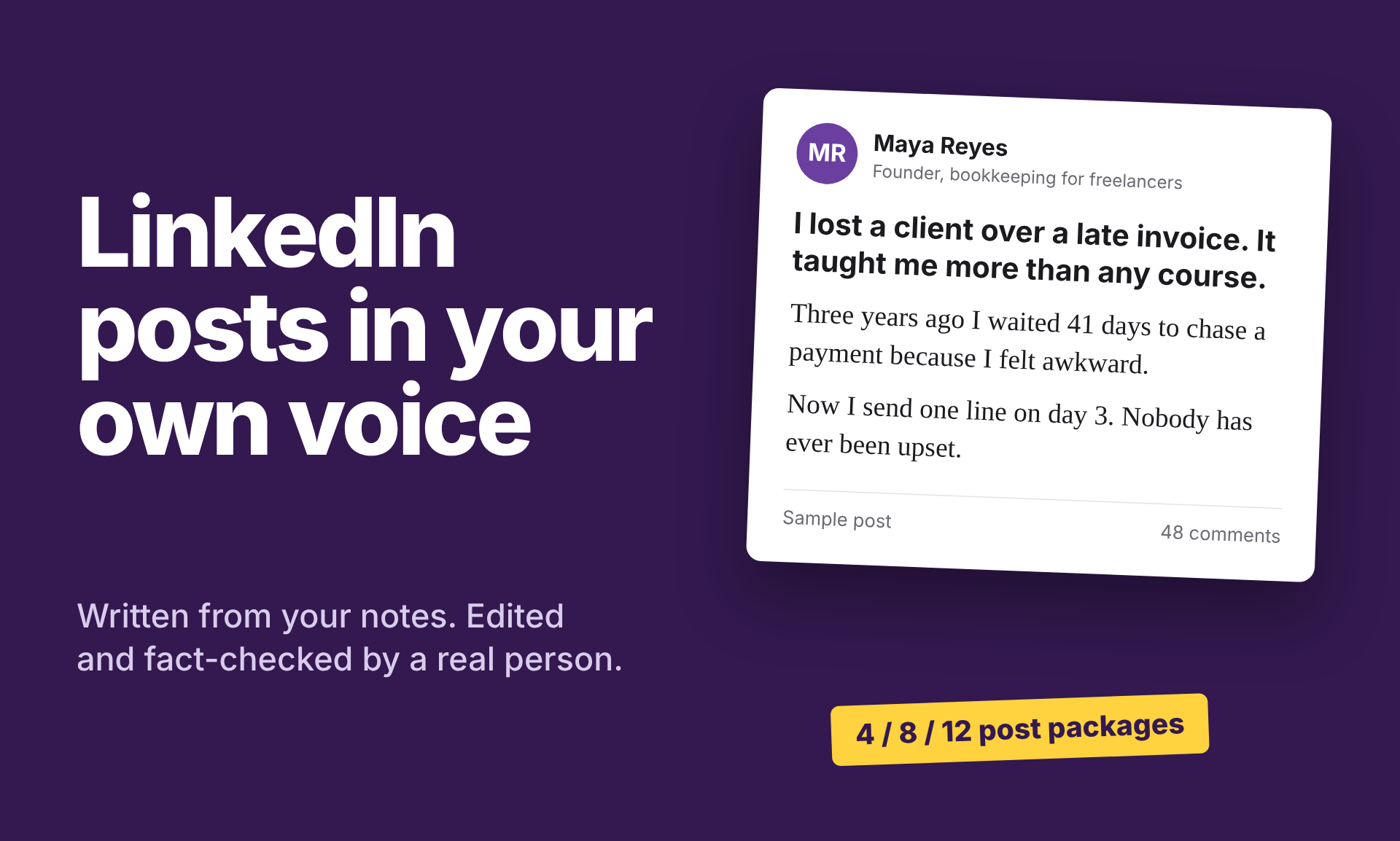
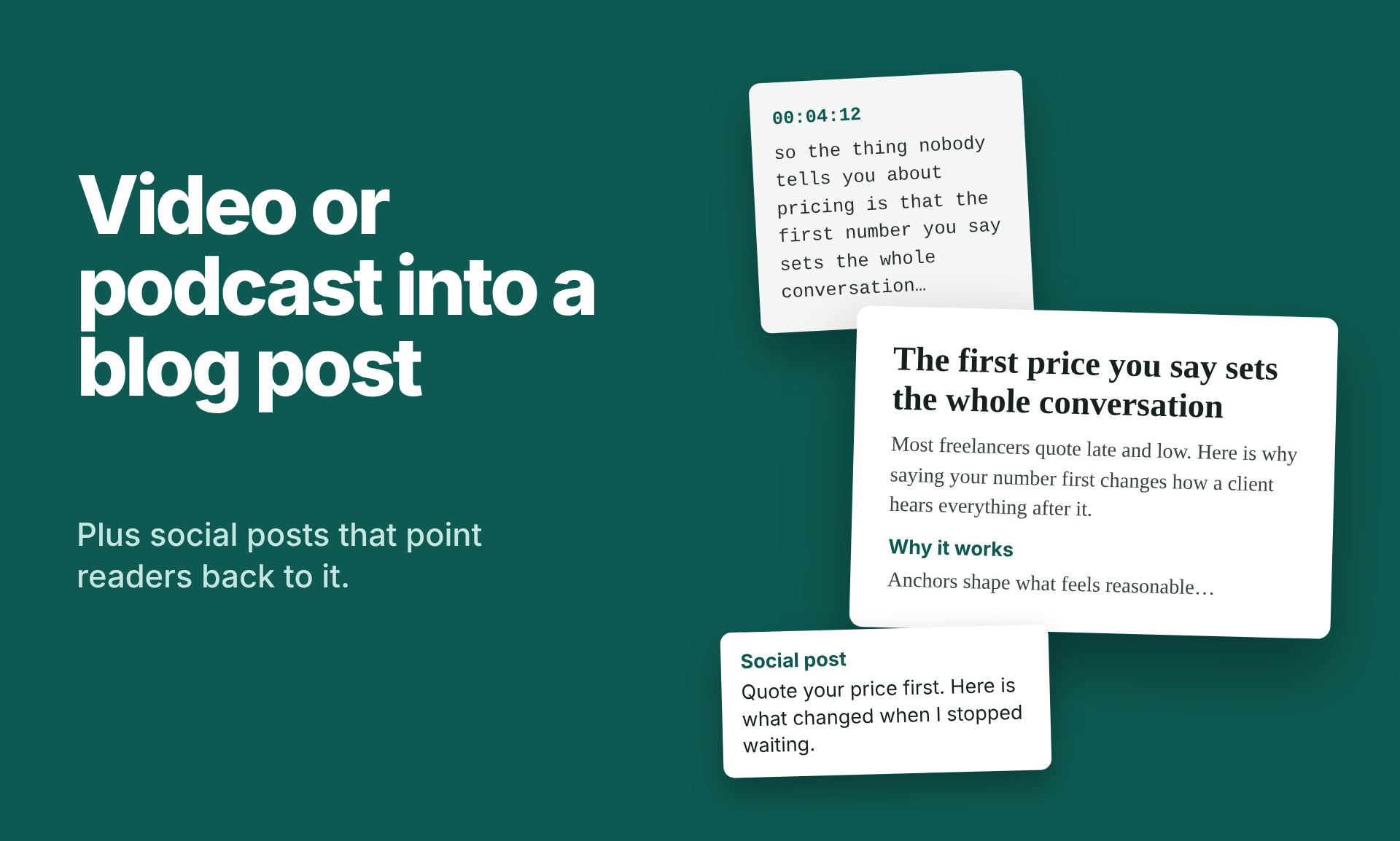
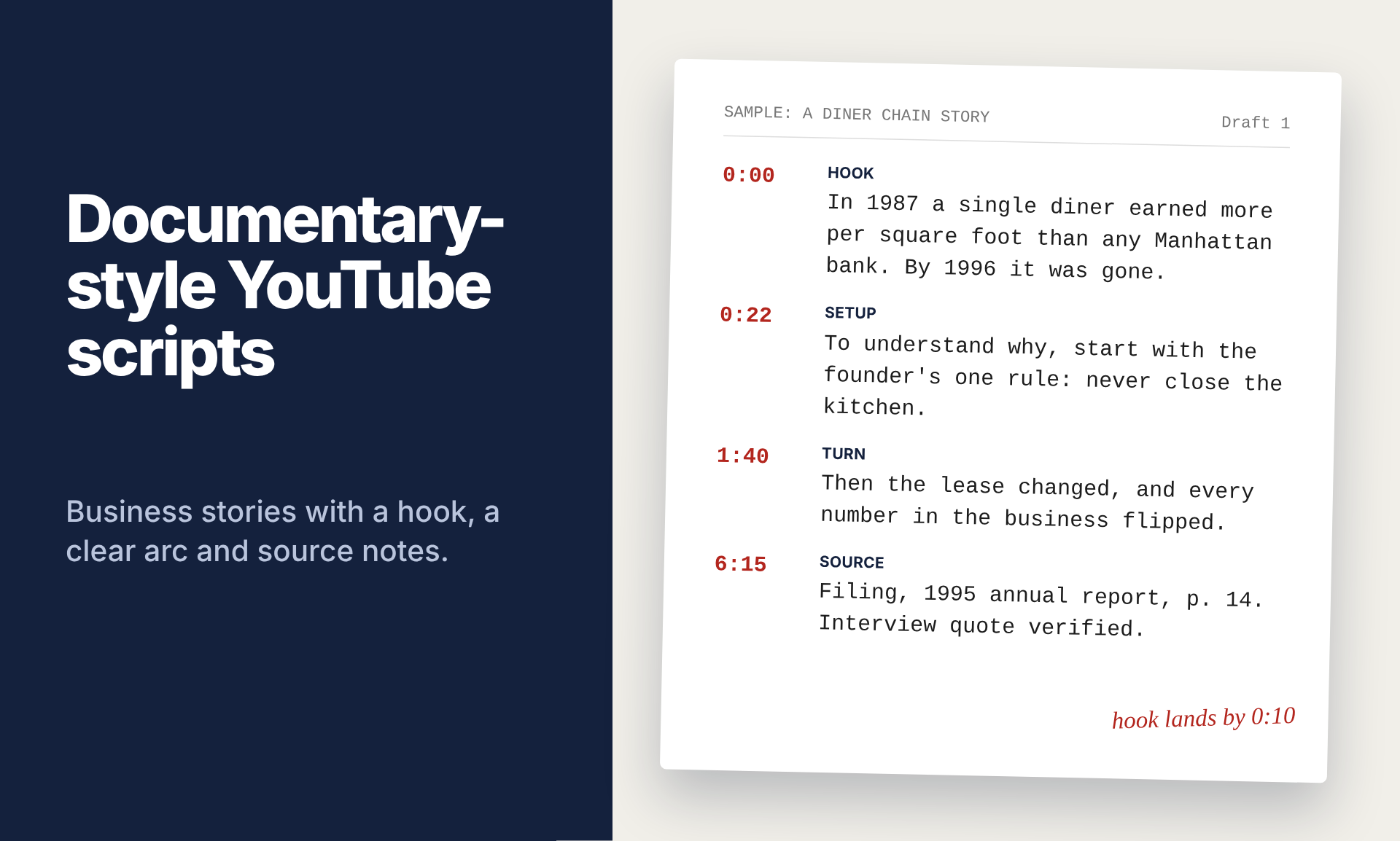
I designed the covers myself in plain HTML and CSS and exported them as images. I wanted them to look like a person made them, not like a template, so each uses a layout that suits what the gig sells. The scripts cover, for instance, is laid out like a real script with timecodes.
What caught me out
New sellers can only have four active gigs. I had planned more. The cap is a good constraint: with only four slots, you have to choose services that will actually sell.
The description limit is tight. The gig description allows 1,200 characters. My first drafts ran well over. Cutting to the limit made them better. Every sentence had to either answer “what do I get?” or “why should I trust this person?”.
Tags are strict. A tag can be at most three words and 20 characters. I had to shorten several to fit.
The editor fights you. The description box automatically turns lines that start with ”- ” into bullets, and pasting formatted text can behave oddly. If your formatting looks wrong, check the preview before you publish, not after.
Portfolio items want a price. The portfolio form would not accept a cost of $0, so I entered $1, which shows as a price band (“Up to $50”) on the page. If you use portfolio pieces you wrote to show your style, label them honestly. I called mine portfolio pieces, not client projects, and said what each one was based on. A fake “client” invites trouble, and a buyer can ask you about them.
Decisions I’d make again
- Promise things I can prove. For the scripts gig, I offer a source list on the higher package and say plainly that facts are checked. That is a promise I can keep and verify.
- Ask questions in the requirements. Each gig asks the buyer for topic, tone, length and anything to include or avoid. It cuts down on revision rounds before the order starts.
- Write the FAQ for real objections. For example: “Do you use real facts, and can I check them?”
- One clear profile. My tagline and About text say who I write for, and what I won’t do (no invented quotes, no filler). It is a short list, but it makes the profile specific.
The scam to watch for
Within a short time of my first gig going live, I received messages that were not orders. They tried to get me to click links. I didn’t click them, and you shouldn’t either. A few rules I follow now:
- Treat every message from a stranger as untrusted until it is a real order inside Fiverr.
- Never click a link, open a file, or move the conversation to another app because a “buyer” asks you to. Fiverr’s rules ask you to keep conversations and payments on the platform, and anyone pushing you off it is a warning sign.
- Never share a password, a code sent to your phone or email, or payment details with anyone, whatever they claim to be.
- Be wary of offers that are too good or too urgent, such as a large order that needs you to “verify” something first.
- If a message looks suspicious, report it inside Fiverr rather than replying.
What I’d tell someone starting today
- Pick services you can do well with samples you can show honestly.
- Spend your time on the first image and the first two lines of the description. Those are what buyers see in search.
- Don’t fake reviews, clients or portfolios. They are easy to spot and hard to recover from.
- Expect the first order to take a while. Plan to look for work elsewhere (direct outreach, other platforms) at the same time rather than waiting.
I will update this post when I have a real result to report, good or bad.